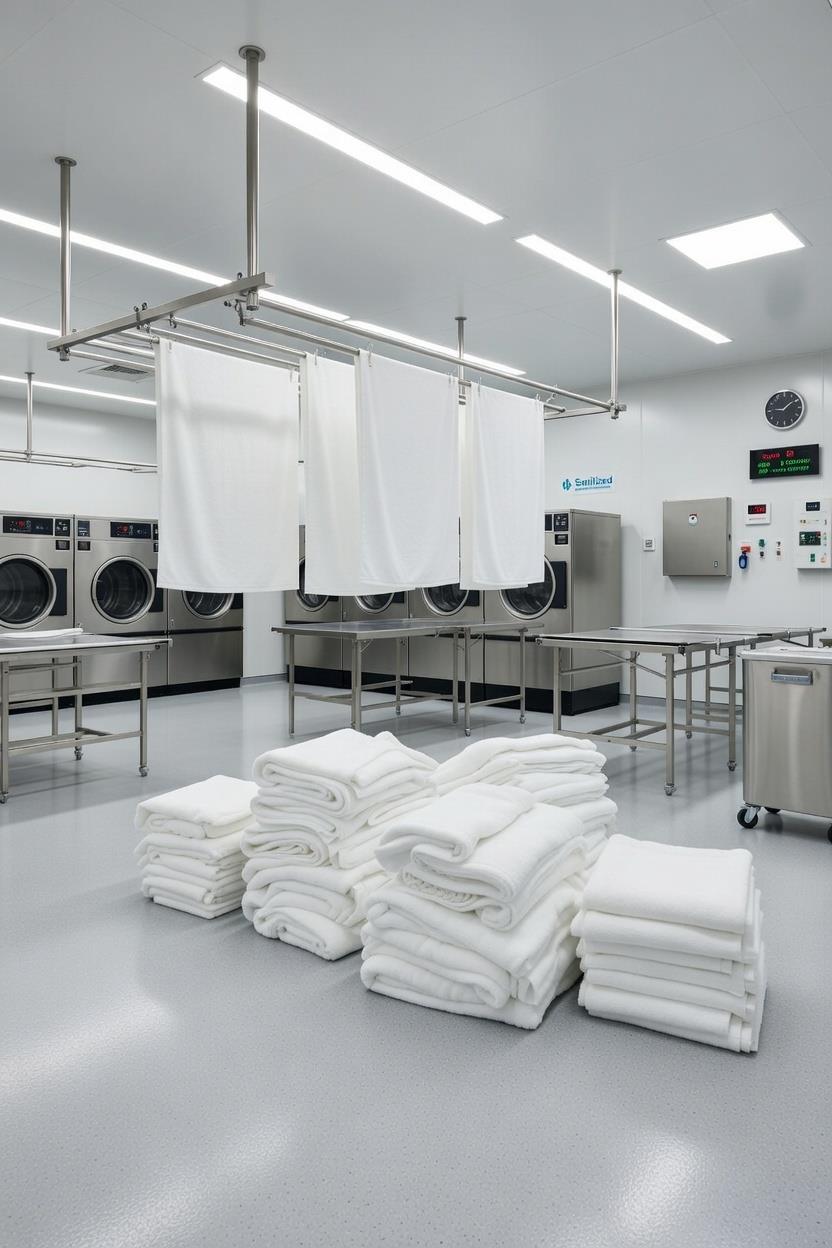
In Kenyan hotels, towels face heavy daily use plus local environmental factors: hard water (high in minerals like calcium and magnesium, common especially from boreholes), high humidity (especially on the coast), dust/sand (coastal and dry areas), body oils, lotions, sunscreen, and sweat. These make towels stiff, grayish, smelly, less absorbent, or prone to quick wear if not handled right.
The goal is always the same: keep towels hygienic, soft, fluffy, white/bright (for colors), and long-lasting while controlling costs.
Sort properly every time — Separate whites from colors to avoid staining. Group by soil level (lightly used guest towels vs. heavily soiled spa/beach ones). Pre-shake out sand, hair, or debris—especially important in coastal hotels where sand gets everywhere.
Don’t overload machines — Leave enough space for water and agitation to move freely. Overloading traps dirt and minerals inside fibers.
Temperature choices — Use warm water (around 40–50°C) for routine washes—it cleans oils and sweat well without damaging fibers too much or causing excessive shrinkage. Reserve hotter water (up to 60°C+) only for very soiled loads or when extra hygiene is needed (e.g., after illness). In very hot coastal weather, avoid overly hot washes to prevent setting stains faster.
Extra rinse is essential — Always add at least one extra rinse cycle. Minerals from hard water stick if not fully flushed out, leaving towels stiff and dull.
Avoid coating the fibers — Skip regular use of products that leave residue on fibers (like most fabric conditioners/softeners)—they reduce absorbency, which guests notice immediately. Towels should feel thirsty, not slick.
Dry carefully — Tumble dry on medium heat and remove promptly to avoid over-drying (which makes them board-stiff). In sunny, dry inland/highland areas (like Nairobi), line drying outdoors works well if protected from dust—sun helps naturally brighten and disinfect. On the humid coast, line drying takes longer and risks mildew smell if not dried fast enough—prefer mechanical drying with good airflow.
Water here is frequently moderately to very hard due to borehole/mineral content. This causes mineral buildup fast—towels turn gray/dull, feel rough, and absorb less over time.
Water can be hard plus higher salinity/chloride in some boreholes due to seawater influence. High humidity slows drying and increases mildew risk. Sand, sunscreen, and sea salt add extra soil.
Dust and lower humidity help drying but hard water is still common.
Stain pre-treatment — Spot-treat makeup, food, or oil stains right away before they set—warm water and gentle mechanical action help.
Odor control — If musty smells appear (common in humid zones), run occasional plain hot washes with no detergent but a mild acid additive to kill bacteria buildup.
Staff training — Consistent sorting, dosing, and cycle choices make the biggest difference—small changes prevent big problems.
Stock rotation & inspection — Rotate towels so they wear evenly. Retire ones that stay stiff/gray even after good washes—they won’t recover fully.
Follow these region-adapted basics consistently, and towels stay softer, whiter, more absorbent, and last much longer—saving money on replacements while keeping guests happy with that fresh, luxurious feel.
(Word count: approximately 708)
Egyptian cotton linens, bath towels, bed sheets & amenities delivered across Kenya & East Africa.
Get a Free Quote →